Why Governance Tokens Are Not Democracy
Governance tokens get marketed as the democratic layer of decentralized protocols. The pitch goes something like this: token holders vote on upgrades, treasury allocations, and risk parameters, and the whole thing approximates a digital republic. The reality is messier. Governance tokens are better understood as coordination instruments with embedded economic incentives, not democratic institutions. They sit at the intersection of mechanism design, principal-agent problems, and cryptoeconomic security. For anyone working on consensus safety or cross-chain trust assumptions, the distinction matters because governance can override the very guarantees that formal analysis tries to establish.
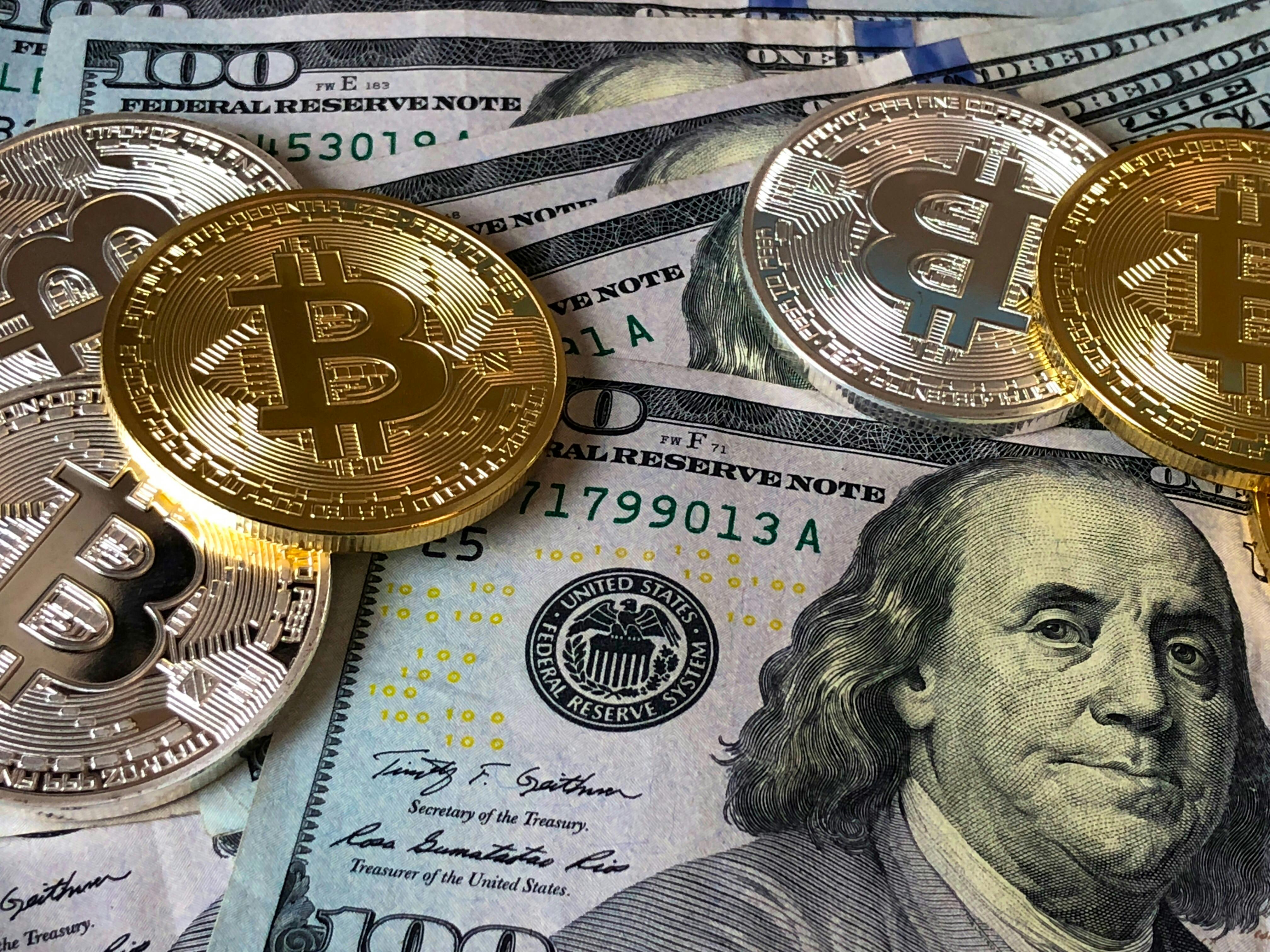
This article examines what governance tokens actually do, why their outputs diverge from democratic outcomes, and where the failure modes become security-relevant. It ends with a falsifiable claim about measurable plutocracy in on-chain voting.
What a Governance Token Actually Is
A governance token is a transferable asset that grants its holder the right to participate in protocol decision-making. The typical implementation is a smart contract that tallies votes proportionally to token balance, with delegation, quorum thresholds, and sometimes time-locks or vote escrow. The token is not a membership card in a political community. It is a capital asset with a voting side effect.
This distinction matters because the token can be bought, borrowed, lent, and liquidated. A voter in a nation-state cannot usually sell their franchise to the highest bidder. A governance token holder can, and often does, without any change to the formal voting rules. The result is that governance power tracks capital allocation rather than stakeholder identity or long-term alignment.
Adjacent Concepts and Common Confusions
People often conflate governance tokens with shareholder voting, liquid democracy, or futarchy. Each analogy breaks under inspection.
- Shareholder voting operates inside a legal system with fiduciary duties, disclosure requirements, and courts. Governance tokens typically operate outside those constraints.
- Liquid democracy assumes voters can delegate to trusted representatives and recall that delegation. On-chain delegation exists, but the delegate market is thin, unaccountable, and often dominated by a few large funds.
- Futarchy proposes betting markets on policy outcomes. Governance tokens are not prediction markets; they are voting weights.
The more precise frame is that governance tokens are a mechanism for coordinating capital around protocol parameters. Whether that coordination produces good outcomes is an empirical question, not a normative one.
Why Voting Is Not Democratic
Democracy, in its minimal procedural form, requires something like equal voting power among affected parties, or at least a defensible weighting scheme. Governance tokens violate this in three structural ways.
1. Plutocratic Weighting by Default
One token, one vote is not one person, one vote. A holder with 10% of the supply controls 10% of the voting power, regardless of how many humans stand behind that address. This is not a bug in the code; it is the intended design. But it means the median voter theorem, which assumes a distribution of preferences across individuals, does not apply. The relevant distribution is across token balances, which is typically heavy-tailed.
Empirical work on DAO voting has found that a small number of addresses control a large share of voting power in many major protocols. The exact concentration varies by token distribution, vesting schedules, and exchange custody, but the pattern is consistent. When a single address or a coordinated cluster can pass or block a proposal, the system is functionally an oligarchy with extra steps.
2. The Exit Option Changes the Game
In a territorial democracy, exit is costly. You can move, but you lose your community, your property rights, and your legal protections. In a token-governed protocol, exit is cheap. You sell the token. This changes the strategic calculus for every voter.
A token holder who disagrees with a proposal can simply sell before the vote executes. This is rational, but it means the set of voters at execution time is not the set of stakeholders who will bear the consequences. The people who remain are those who either support the proposal or cannot exit quickly enough. This is a form of selection bias in the voting population that no quorum threshold fixes.
3. Delegation Is Not Representation
Delegation is often presented as the solution to low voter turnout. Token holders delegate to professional voters or protocol politicians. But delegation in governance tokens lacks the accountability mechanisms of representative democracy. There are no recall elections, no term limits, and no requirement that delegates disclose conflicts of interest.
In practice, many delegates are venture capital firms, market makers, or protocol insiders. They may hold large positions in competing protocols, or they may be paid to vote a certain way. The token holder who delegates has no easy way to monitor this. The result is a principal-agent problem with weak monitoring and no enforcement.

Security Implications for Protocol Engineers
For anyone doing formal analysis of consensus safety, governance is not a separate concern. It is a backdoor into the protocol’s security assumptions.
Governance as an Attack Surface
A protocol may have a formally verified consensus mechanism, but if governance can change the validator set, the slashing conditions, or the bridge contract, then the formal guarantees are conditional on governance behaving well. That condition is rarely stated in the security model.
Consider a cross-chain bridge that relies on a multisig controlled by governance tokens. The bridge’s safety depends on the assumption that a threshold of signers will not collude. But if an attacker can buy enough governance tokens to replace the signers, the assumption collapses. The attack does not exploit a cryptographic flaw. It exploits the economic concentration of voting power.
Time-Locks and the Illusion of Safety
Many protocols use time-locks to delay governance decisions, giving users time to exit if they disagree. This is a useful mitigation, but it is not a guarantee. A time-lock delays execution; it does not change the distribution of voting power. If a malicious proposal passes, the time-lock gives attentive users a window to leave. Inattentive users, or users locked into other contracts, remain exposed.
Time-locks also create a new attack surface: the governance front-running problem. An attacker who knows a proposal will pass can position themselves to profit from the expected state change before it executes. This is not illegal in most jurisdictions, and it is often indistinguishable from normal market activity.
Cross-Chain Trust Assumptions
Cross-chain protocols add another layer. A governance token on one chain may control a contract on another chain. The trust assumptions now span two consensus mechanisms, two sets of validators, and one governance process. Formal analysis of such systems must include the governance token as a first-class component, not an external parameter.
If a governance vote on Chain A can upgrade a bridge contract on Chain B, then the safety of Chain B’s bridge depends on the voting power distribution on Chain A. This is a transitive trust assumption that is rarely documented. It is also a natural place for formal modeling: under what conditions does a rational attacker prefer to buy governance tokens rather than attack the consensus layer directly?
What the Data Shows
Several studies have attempted to measure voting power concentration in DAOs. The results are consistent with the plutocracy hypothesis. In many major protocols, the top 1% of addresses control a majority of voting power. The Gini coefficient of token distribution is often above 0.8, which is higher than most countries’ income inequality.
This does not mean governance tokens are useless. It means they are not democratic in any meaningful sense. They are a way to coordinate capital around protocol decisions, and they work reasonably well for that purpose when the capital is aligned with the protocol’s long-term health. When it is not, the system fails in predictable ways.

Falsifiable Claim
Here is a claim that can be tested with on-chain data: In any governance token with a market cap above $100 million and a voting participation rate below 20%, the top 10 addresses control at least 40% of the voting power in more than 80% of proposals. This claim is specific enough to be falsified. If it holds, it provides a quantitative basis for treating governance tokens as plutocratic coordination mechanisms rather than democratic institutions.
FAQ
Are governance tokens the same as shareholder voting?
No. Shareholder voting operates within a legal framework that includes fiduciary duties, disclosure rules, and judicial enforcement. Governance tokens typically lack all three. The economic incentives are similar, but the accountability mechanisms are much weaker.
Can a governance token be made more democratic?
In principle, yes. Quadratic voting, identity verification, and non-transferable reputation systems can reduce plutocratic weighting. But each introduces new trade-offs: sybil resistance, privacy loss, and reduced capital efficiency. The question is whether the protocol’s stakeholders are willing to accept those costs.
Why do protocols use governance tokens if they are not democratic?
Because governance tokens solve a real coordination problem. They allow capital to signal preferences about protocol parameters without requiring a centralized authority. The fact that this process is not democratic does not mean it is useless. It means the language of democracy is misleading.
What is the biggest security risk from governance tokens?
The biggest risk is that governance can override the protocol’s formal security assumptions. A verified consensus mechanism is only as safe as the governance process that can change it. If an attacker can buy enough voting power to alter slashing conditions or bridge signers, the formal guarantees are void.
Next Steps for This Publication
This article is the first in a series on governance as a security surface. The next piece will examine governance attack simulations: how to model the cost of buying a majority in a specific protocol, and what that cost implies for the protocol’s security budget. A follow-up glossary entry will define the key terms used here, including plutocracy, vote escrow, and principal-agent problems in DAOs.
If you are working on formal models of governance, or if you have data on voting power concentration in a specific protocol, the comment section is open. The falsifiable claim above is a starting point, not a conclusion.

How AI is Breathing New Life into Creative Arts

The Circuit Breaker Pattern Everyone Misses: Why Bulkhead Isolation Will Save Your Distributed System

Unveiling the Future: Critically Understanding AI’s Revolutionary Splash in Creative Arts
About Author
