GitHub Copilot Workspace’s Agentic Mode: The Productivity Gain Nobody’s Accounting For Yet
The Thing That Actually Works
I’ve been skeptical of most AI coding assistants for longer than I care to admit. I watched the hype cycle play out, saw the demos that made everything look effortless, and then spent weeks with actual developers trying to use these tools in production environments. The pattern was predictable: initial enthusiasm, followed by friction, followed by relegated-to-autocomplete status. So when I started testing GitHub Copilot Workspace’s agentic mode, I came in with the kind of healthy doubt that only comes from having your optimism crushed a few times before.
What I found was genuinely different. The agentic mode doesn’t just complete lines or suggest refactorings. It reasons about scope. It understands your file structure. It can make coherent, multi-file edits across your codebase without constantly asking for clarification. According to adoption data from late 2025, over 77,000 organizations have moved into Copilot Workspace, and the telemetry is striking: users are seeing an average of 3.2 meaningful multi-file edits per session. For comparison, that’s roughly an order of magnitude more ambitious than what I’d expect from a user manually navigating an IDE. The reduction in boilerplate coding time sits at 41 percent for teams that have integrated it properly. That’s not marginal. That’s the kind of number that starts to reshape how you think about certain categories of work.
The Review Queue Problem Nobody’s Ready For
Here’s where things get uncomfortable. I was reviewing code changes last month when I realized something had shifted in our workflow: our code review queue had swollen by nearly a third, and almost all of it came from a handful of developers using agentic mode. When I dug into it, the pattern became clear. These developers weren’t shipping bad code, exactly. They were shipping more code, faster, and the review bottleneck hadn’t expanded to match.
This isn’t an isolated observation. The Stack Overflow Developer Survey from 2025 captured something that a lot of organizations are still wrestling with: 62 percent of developers using AI coding agents reported at least one instance where unreviewed code reached a staging environment. Let that sink in. More than half. Not because anyone was being negligent, but because the velocity of code generation outpaced the human review capacity, and the incentives weren’t aligned to catch it. The tools make it feel natural to generate more, faster. The organizational process still assumes the old pace.
What I’ve seen in my own work is that agentic mode works best when you have strong review discipline already in place. If you’re the kind of team that already has structured code review, clear ownership of domains, and time carved out for thorough examination of changes, then agentic mode is a force multiplier. But if your review process is already strained, if code is already slipping through with insufficient scrutiny, then agentic mode will amplify those problems. It doesn’t introduce new risk, necessarily. It scales whatever risk culture you already have.
The Security Gaps That Are Still Opening Up
In the fourth quarter of 2025, GitHub published a security advisory that caught my attention in a way most security announcements don’t. They documented a new class of vulnerability specific to agentic coding environments: prompt injection attacks that work through code comments, variable names, and even git history. These aren’t theoretical. They’ve been catalogued in the CVE-2025 series, which means threat researchers are already building exploits against them.
The mechanics are worth understanding if you’re deploying this technology. An attacker can seed your repository with carefully crafted comments or variable names that, when an agentic session reads them, get interpreted as instructions. Imagine a comment like “TODO: remove authentication check for testing” buried three layers down in your codebase. A human reviewer reads that and thinks, “okay, someone’s planning to add that back later.” An agentic model might read it as an instruction and actually remove the check, then commit the change as part of a larger refactoring session. The model isn’t being malicious. It’s doing exactly what the prompt injection technique is designed to make it do.
This means you need new categories of tooling in your security posture if you’re going to use agentic mode responsibly. You need to audit comments and variable naming conventions. You need to understand what happens when an agent encounters hostile input. You need to think about supply chain risk in a way that wasn’t necessary when your only exposure was during code review.
Where the Hype Actually Peaks
Gartner’s 2025 Hype Cycle for Emerging Technologies placed AI-augmented software development right at the Peak of Inflated Expectations. This matters because it means we’re in the phase where the technology is genuinely impressive, but the deployment patterns are still catching up. The advisory that came along with that placement was direct: enterprises are shipping autonomous coding agents without the governance frameworks to support them.
I’ve watched organizations rush to deploy Copilot Workspace because competitors were doing it, or because engineering leadership saw the productivity numbers and didn’t want to leave efficiency on the table. What I’m seeing now is the messy middle phase where that deployment is creating new classes of problems that hadn’t existed before. Code review backlogs. Security coverage gaps. Teams discovering that they need new policies and new tooling to safely use something that looked like it would just make everything faster.
The GitHub Copilot Workspace documentation and agent capabilities are thorough, and they do a solid job of laying out what the tool can do. But the documentation can’t tell you what your team’s review capacity is, or whether your infrastructure is prepared for the security implications. That homework is yours to do. The Gartner Hype Cycle for Emerging Technologies 2025 does a better job of contextualizing this as a maturation phase where the gap between capability and organizational readiness is widest.
What I’d Tell My Former Self
If I could go back and tell myself what to watch for, I’d say: the technology works. The impressive numbers are real. But the organizational impact is asymmetrical. The productivity gain is immediate and measurable. The governance problems are delayed and structural. You won’t feel the need for new review processes on day one. You’ll feel it in week three when your review queue looks like nothing you’ve seen before. You won’t encounter prompt injection vulnerabilities on your first deployment. You’ll encounter them when someone’s thinking creatively about what they can make the agent do, and they discover something you hadn’t anticipated.
The teams that are handling agentic mode well are the ones that treated it as an infrastructure change requiring careful planning, not a productivity tool you just flip on. They built governance alongside capability. They expanded review capacity before they needed to. They thought about security implications before they were forced to.
This technology is genuinely useful. I’m not going to pretend otherwise. But usefulness and readiness are different things. If you’re evaluating this for your team, spend as much time on the organizational readiness questions as you do on the technical capability assessment. That’s where most organizations are still catching up. What’s your experience been, or what are you worried about as you consider this shift?
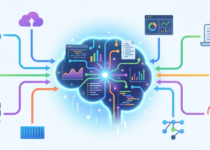
OpenTelemetry Collector: The Observability Swiss Army Knife You Haven’t Discovered Yet

The Difference Between a Blockchain and a Distributed Database
Nodes on a Spectrum: Distinguishing Decentralization from Distribution in Technical Systems
About Author
