Extended Thinking Mode Changed My Approach to Production Code — Here’s What Actually Happened
The Problem I’ve Been Living With
For the last three years, I’ve watched AI coding assistants get incrementally better at generating code, but there’s been a persistent gap between what they output and what I’m willing to merge into production. The models would give me something syntactically correct that looked reasonable at first glance, but the logic was often brittle or missed edge cases that only reveal themselves under real load. I found myself in this exhausting loop: use the AI for scaffolding, then spend twice as long debugging its assumptions as I would have spent writing from scratch. That wasn’t actually saving me time. It was just moving the problem around.
The real issue wasn’t speed. It was trustworthiness. I needed the model to think through the problem the way I do when I’m being careful, not just pattern-match against training data and hope. That’s why when Anthropic released Claude 3.7 Sonnet in February 2025, I was skeptical but paying attention. The hybrid extended thinking mode wasn’t just another incremental improvement. It was addressing something fundamental about how AI reasoning works at scale.
What Extended Thinking Actually Does Differently
Most AI models generate output token by token in a single forward pass. They’re fast, but they’re also committing to decisions without fully exploring the problem space. The extended thinking approach in Claude 3.7 Sonnet flips that dynamic. The model can now use up to 128,000 reasoning tokens internally before producing a single line of visible output. It’s like watching someone work through a problem on a whiteboard before they write the final answer. The reasoning stays hidden, but the output benefits from all that internal deliberation.
Here’s what matters for production code: the model can self-audit its own logic before committing. It can catch off-by-one errors, think through race conditions, question its assumptions about data types and null handling. When I send a complex refactoring request or ask it to build something in an unfamiliar architecture, I can enable thinking mode and get a response that feels like it’s been pressure-tested. The benchmarks back this up. On SWE-bench Verified leaderboard, Claude 3.7 Sonnet scored 70.3 percent. That’s not an incremental tick upward. That’s the kind of jump that changes whether you can reasonably use a model for real software engineering work or you’re still stuck using it for boilerplate and documentation.
What I’ve noticed is that the model makes different kinds of mistakes when thinking mode is engaged. Instead of logical errors that cascade through edge cases, I now see occasional over-engineering or slightly verbose solutions I can fix with a simple clarification. That’s a trade I’ll take every time. Over-engineering is correctable. Hidden logic errors in production are a nightmare.
How This Actually Changed My Workflow
I started experimenting with extended thinking on a service I maintain that processes financial transactions. This is exactly the kind of code where subtle bugs are expensive. I asked Claude 3.7 Sonnet to help me refactor a batch processing function that had been a source of intermittent issues. In rapid mode, I got a clean refactor that looked good. In thinking mode, it came back with a completely different approach that handled state management in a way that eliminated an entire class of race condition I hadn’t explicitly mentioned but should have been thinking about.
The shift in my workflow has been real, though not dramatic. I still write a lot of code myself. But for complex refactoring, for implementing tricky algorithms where correctness matters more than development speed, and for reviewing AI-assisted work from other team members, thinking mode has become my default. I use it maybe thirty percent of the time on average work, but ninety percent of the time when the stakes are higher. The API supports toggling between thinking and rapid mode within a single conversation, which means I can ask a quick clarifying question in rapid mode and then engage deeper thinking when I need it. That flexibility matters.
What I haven’t seen yet is the model getting significantly slower in thinking mode on most tasks. There’s a latency cost, sure, but it’s measured in seconds for most code-related reasoning. For a fifteen-minute refactoring task, waiting an extra three seconds for better reasoning is noise. The real gain is in quality and confidence, not speed.
The Broader Context That Makes This Matter
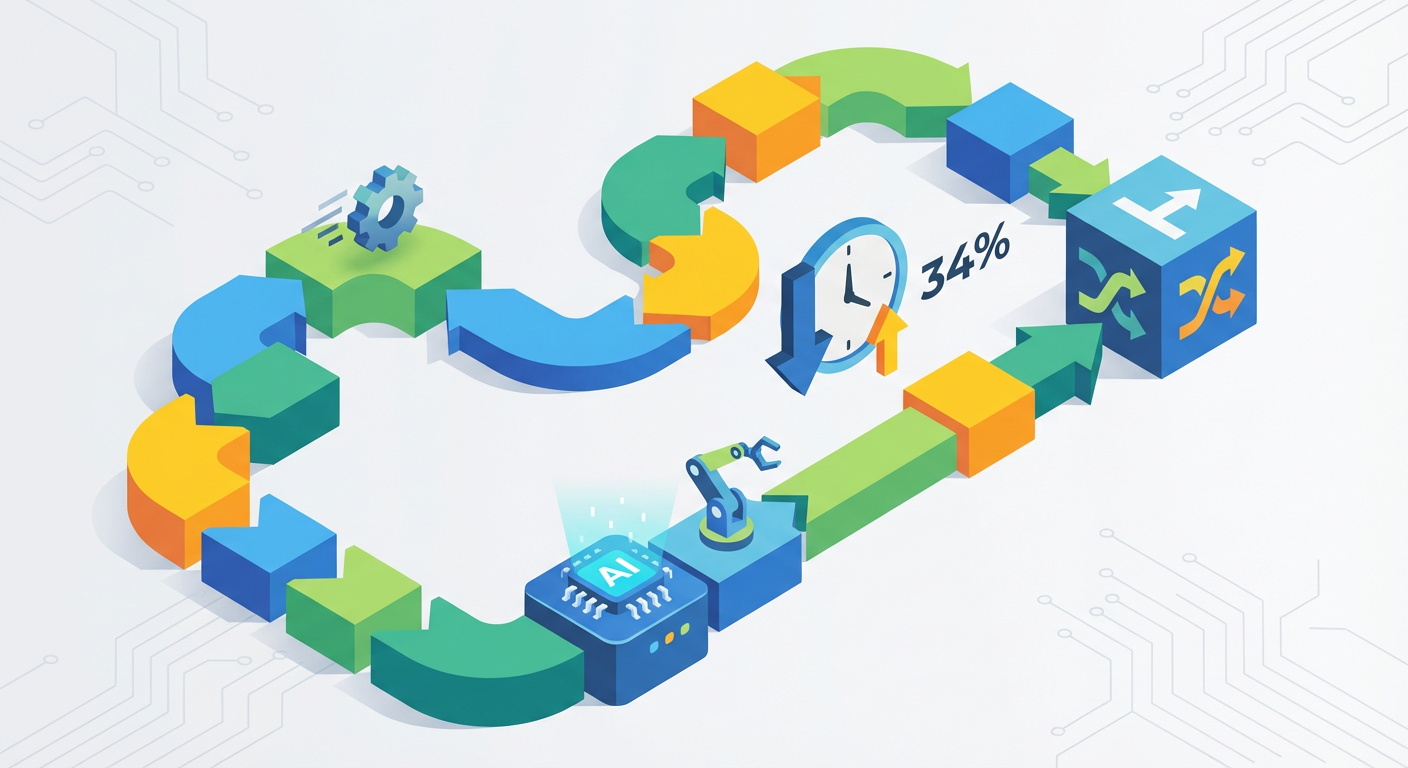
I’ve been skeptical about AI adoption timelines in software engineering precisely because I’ve lived through the gap between capability and production-readiness. According to the 2025 Stack Overflow Developer Survey, seventy-six percent of professional developers now use AI coding tools daily, up from forty-four percent just two years ago. That’s not necessarily evidence of better tools though. It could just be that the tools are convenient enough to use even when the quality is mediocre. But watching the Anthropic Claude 3.7 Sonnet announcement coincide with the February 2026 GitHub Copilot enterprise report showing that average pull request review-to-merge time dropped thirty-four percent in surveyed teams, I think something actually shifted.
Those metrics suggest the tools are producing code that requires less human intervention on review. That’s not trivial. Code review is where humans catch the mistakes AI models make, and a thirty-four percent reduction in review time is evidence that fewer catches are needed. I’m not claiming AI code is now perfect. I’m saying it’s crossed a threshold where it’s saving more time in review than it costs in initial generation and debugging.
What I’m Still Watching
Extended thinking mode isn’t a silver bullet. I’ve already found cases where the model overthinks straightforward problems, or where the reasoning process leads to correct but unnecessarily complex solutions. The model can also be confident in reasoning that turns out to be wrong once you test it. But these aren’t new failure modes. They’re just different expressions of the same constraint: the model is limited by its training data and can’t truly reason about systems it hasn’t encountered before.
What I’m interested in tracking is whether this approach scales. The 128,000 reasoning token budget is substantial, but real-world systems have complexity that might require even deeper thinking. I’m also curious whether other model providers will adopt hybrid thinking modes or whether Anthropic has a window here to establish a standard.
If you’ve been watching AI tooling for code generation with skepticism, I’d encourage you to revisit it with thinking mode enabled. The experience is genuinely different. I’m not suddenly shipping code without review, but I’m spending less time catching obvious mistakes and more time thinking about architecture and design. That’s the kind of shift that actually moves the needle on productivity. What’s your experience been with extended thinking or comparable reasoning-focused models in your own work?
The Versioning Strategy Nobody Talks About: Why Semantic Versioning Isn’t Enough for APIs

Why Protocol Specifications Are Stories That Nobody Fact-Checks: The Gap Between Prose Specs and Formal Models
Salt Typhoon’s Real Legacy: Why the 2026 Mandates Force Us to Rethink Network Architecture
About Author
